

David Candaux Introduces the DC1 Platinum Art of the Tourbillon
A limited-edition platinum interpretation of David Candaux’s signature inclined flying tourbillon redefines contemporary independent haute horlogerie.
PRESS RELEASE | 739 WORDS | 5 MINUTE READ
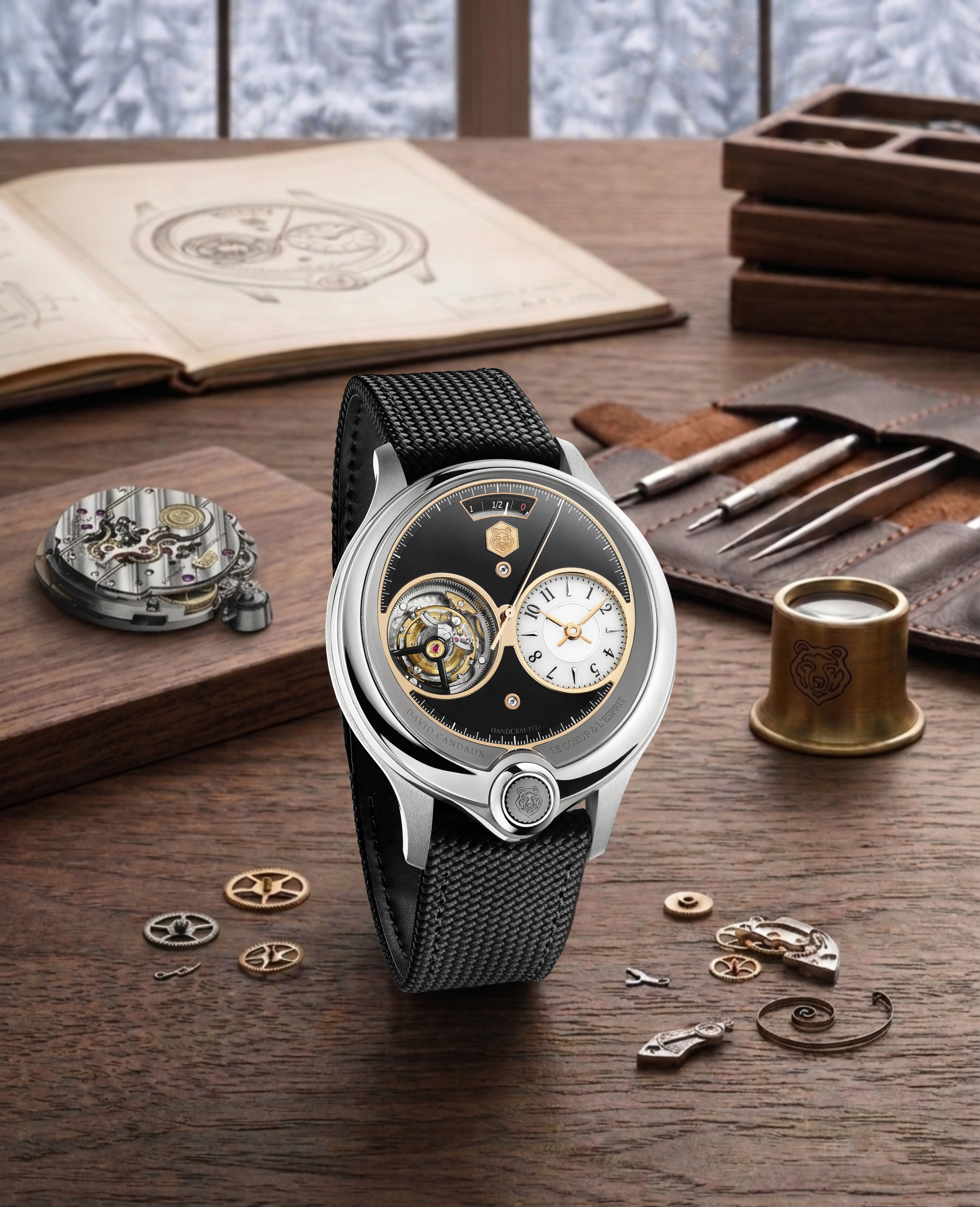
Photo Courtesy: David Candaux
David Candaux Unveils the DC1 Platinum Art of the Tourbillon
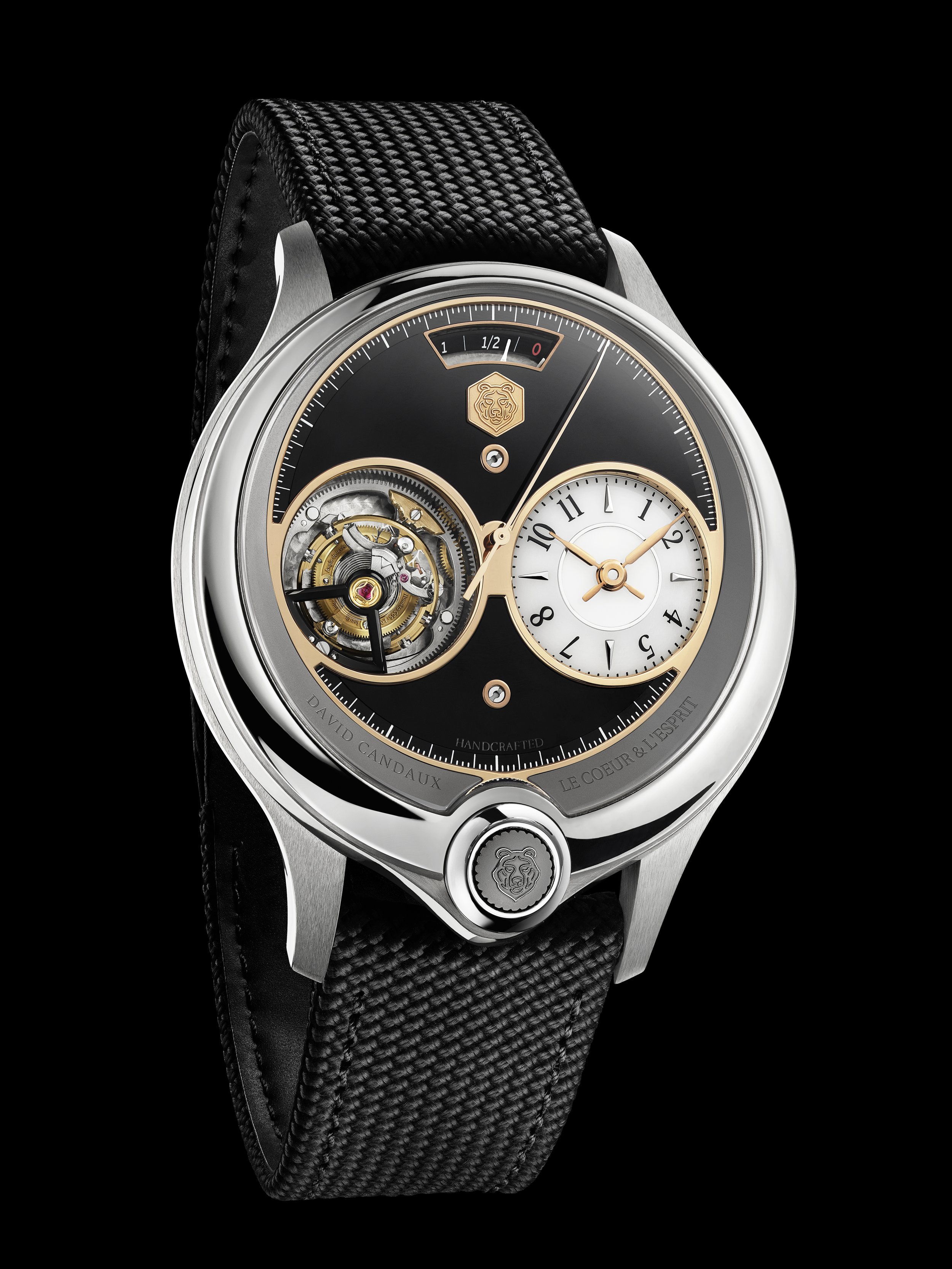
Swiss independent watchmaker David Candaux introduces the DC1 Platinum Art of the Tourbillon, marking the first time the brand’s signature DC1 architecture has been executed in platinum. Presented as a limited edition of eight pieces, the new creation explores the material depth, weight, and presence of platinum while preserving the distinctive technical identity established by the original DC1 First Eight introduced in 2017.
The DC1 Platinum Art of the Tourbillon combines the maison’s patented “Magic Crown” system, asymmetrical case architecture, layered gemstone dial construction, and 30-degree inclined flying tourbillon into one of the most technically expressive creations within contemporary independent watchmaking.
The Evolution of the DC1 Collection
First introduced in 2017, the DC1 First Eight established the design language that continues to define the collection today. Its asymmetrical stepped case, transparent caseback, and inclined flying tourbillon created a recognisable identity within haute horlogerie. For 2026, David Candaux elevates the concept further by crafting the case entirely in platinum, a material historically associated with exceptional watchmaking due to its density, rarity, and finishing complexity.
Platinum Case Construction
The 43 mm asymmetrical platinum case preserves the architectural lines of the original DC1 while introducing an entirely different tactile character on the wrist.
Unlike titanium, platinum is significantly more difficult to finish due to its malleability and density. The material retains every polishing mark and demands extensive hand-finishing to preserve sharp case geometry and crisp transitions. Every surface of the case is entirely hand-polished, emphasising the sculptural nature of the DC1 architecture.
The case construction also incorporates the brand’s signature retractable “Magic Crown” positioned at 6 o’clock, maintaining the symmetrical visual balance of the design.
Layered Dial Architecture with Onyx and Opal
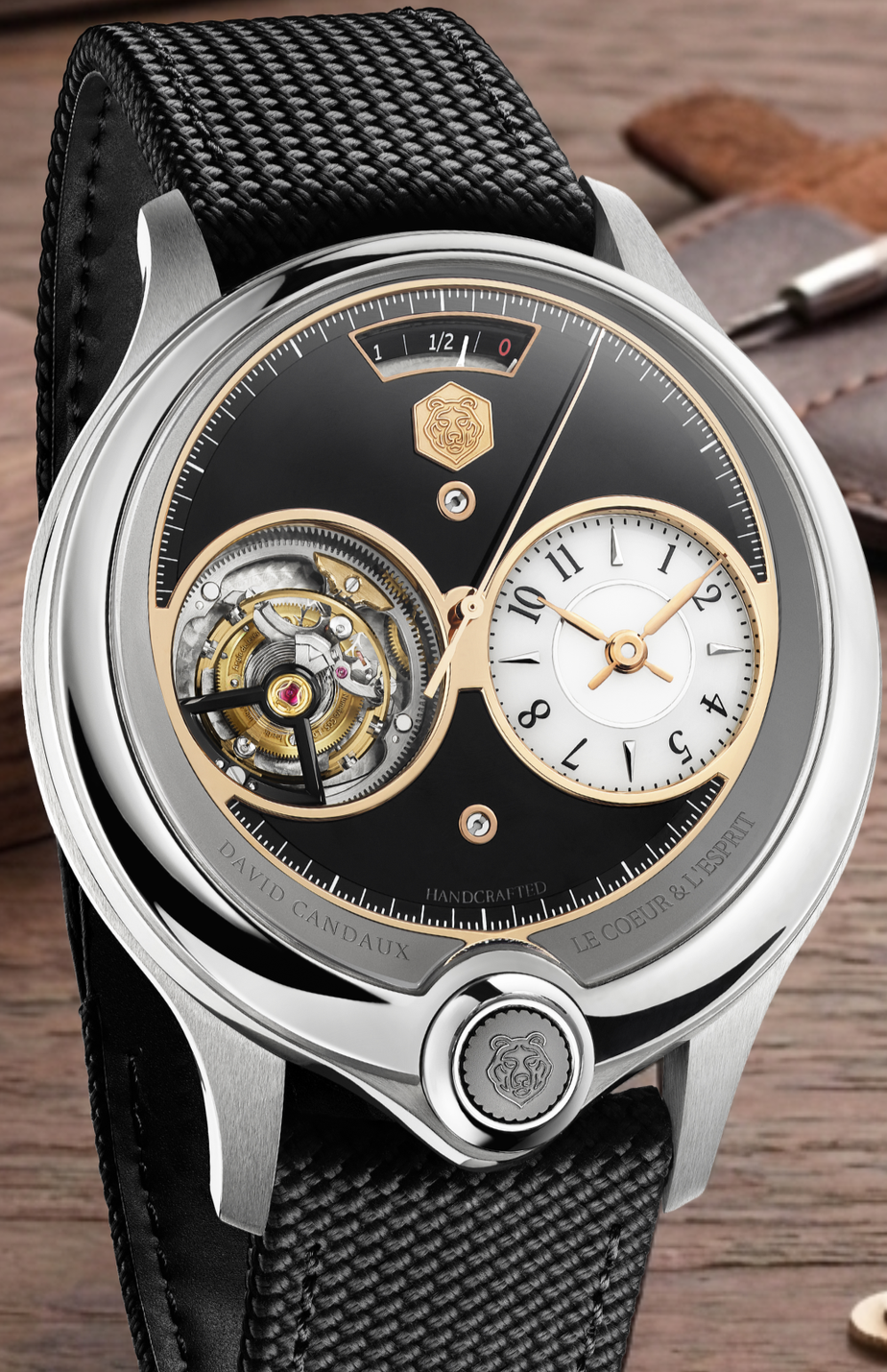
The dial construction of the DC1 Platinum Art of the Tourbillon is composed of multiple layered components designed to create visual depth and dimensionality. At the centre sits a mirror-polished black onyx plate measuring only two-tenths of a millimetre thick.
The extreme fragility of the material makes production highly complex, with multiple onyx blanks required to complete a single finished component.
The hour and minute display positioned at 3 o’clock is crafted from faceted white opal, shaped to follow the domed architecture of the movement. Depending on lighting conditions, the opal reveals changing tonal characteristics ranging from translucent depth to luminous vibrancy. Framing the display are polished 18K rose gold flanges, which visually extend toward the inclined tourbillon positioned at 9 o’clock.
The 30° Inclined Flying Tourbillon
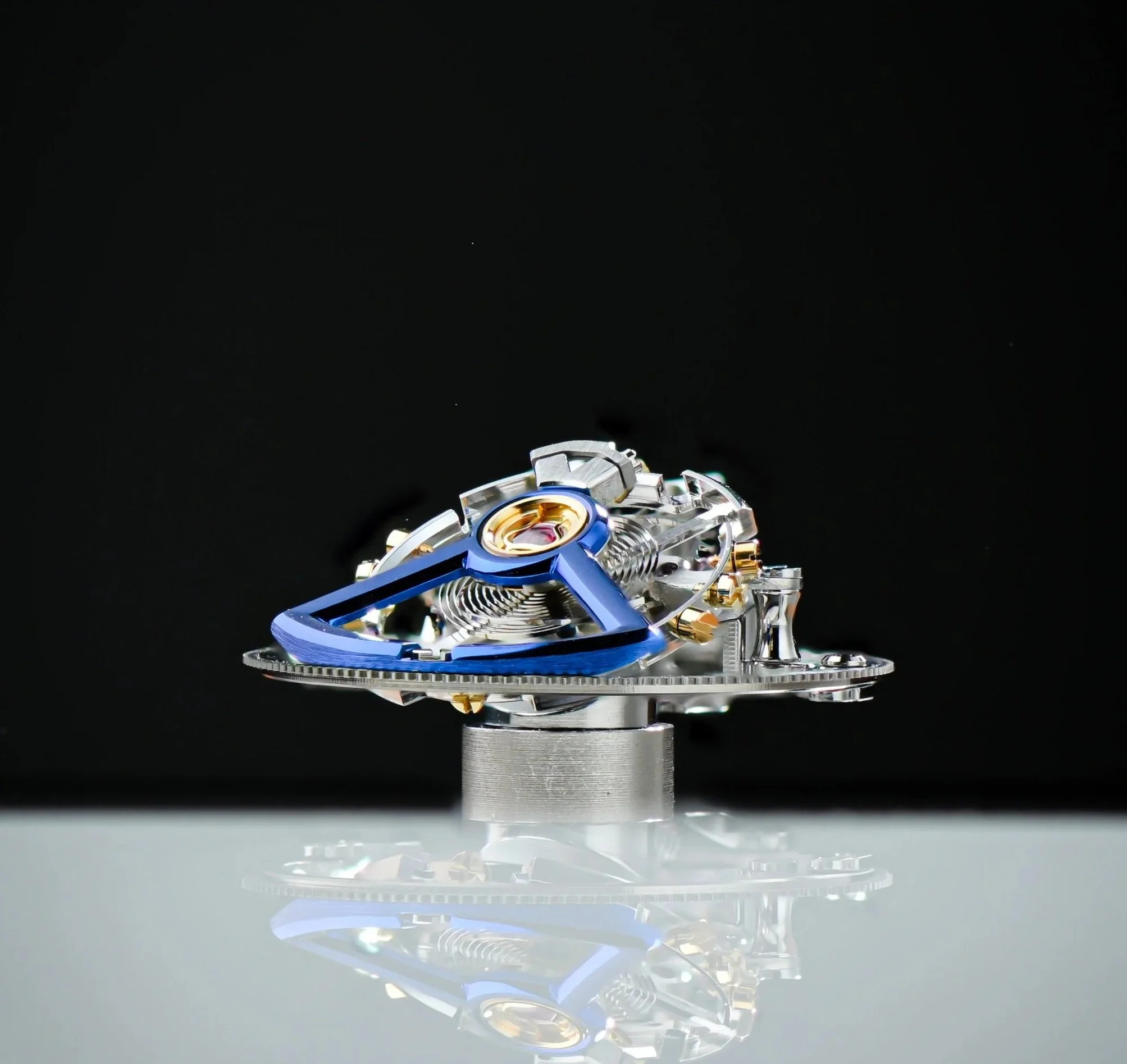
At the heart of the DC1 Platinum Art of the Tourbillon is David Candaux’s signature 30-degree inclined flying tourbillon. Unlike traditional tourbillons designed originally for vertically positioned pocket watches, the inclined architecture improves positional averaging when worn on the wrist. By tilting the cage at 30 degrees, the mechanism operates across a broader range of positions during rotation, improving chronometric consistency. The tourbillon cage itself is crafted from black anodised titanium and completes one full rotation every 60 seconds. David Candaux utilises a specialised micro-arc oxidation process rather than conventional coating methods, creating a permanent black ceramicized titanium surface integrated directly into the material itself.
The In-House H74 Calibre
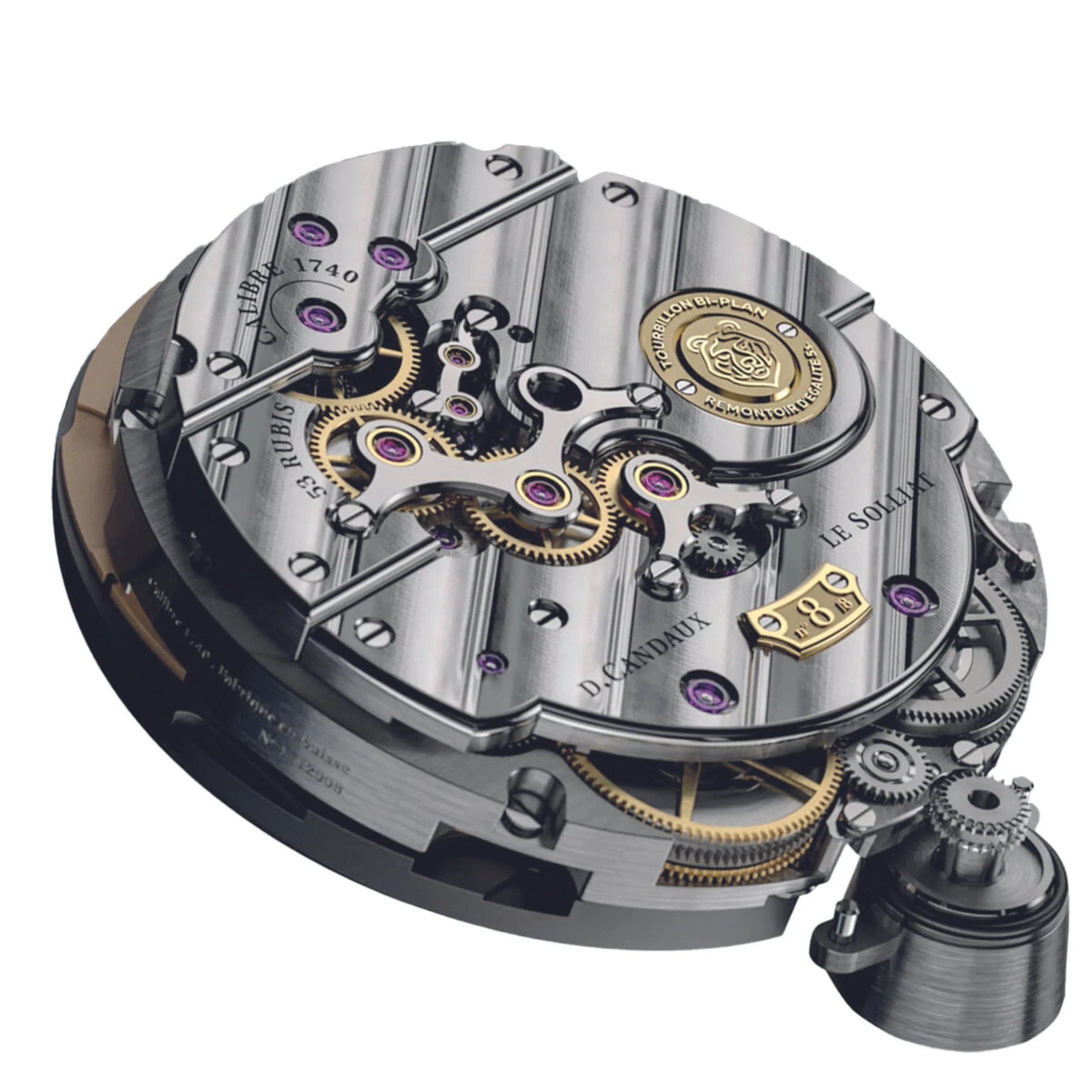
Powering the watch is the manually wound H74 calibre, developed entirely in-house in Le Solliat.
The movement features titanium bridges and a mainplate, chosen for their anti-magnetic properties, corrosion resistance, thermal stability, and lightweight characteristics. David Candaux remains among the few independent watchmakers utilising titanium throughout an entire movement architecture.
Additional technical highlights include:
55-hour power reserve
21,600 vibrations per hour
287 movement components
47 jewels
Variable inertia balance wheel with gold adjustment screws
Phillips terminal curve hairspring
Cascading bridge architecture
Hand-finished “Côtes du Solliat” decoration
Visible through the sapphire caseback, the movement is inclined three degrees relative to the case, creating additional dimensional depth throughout the architecture.
The Patented “Magic Crown”
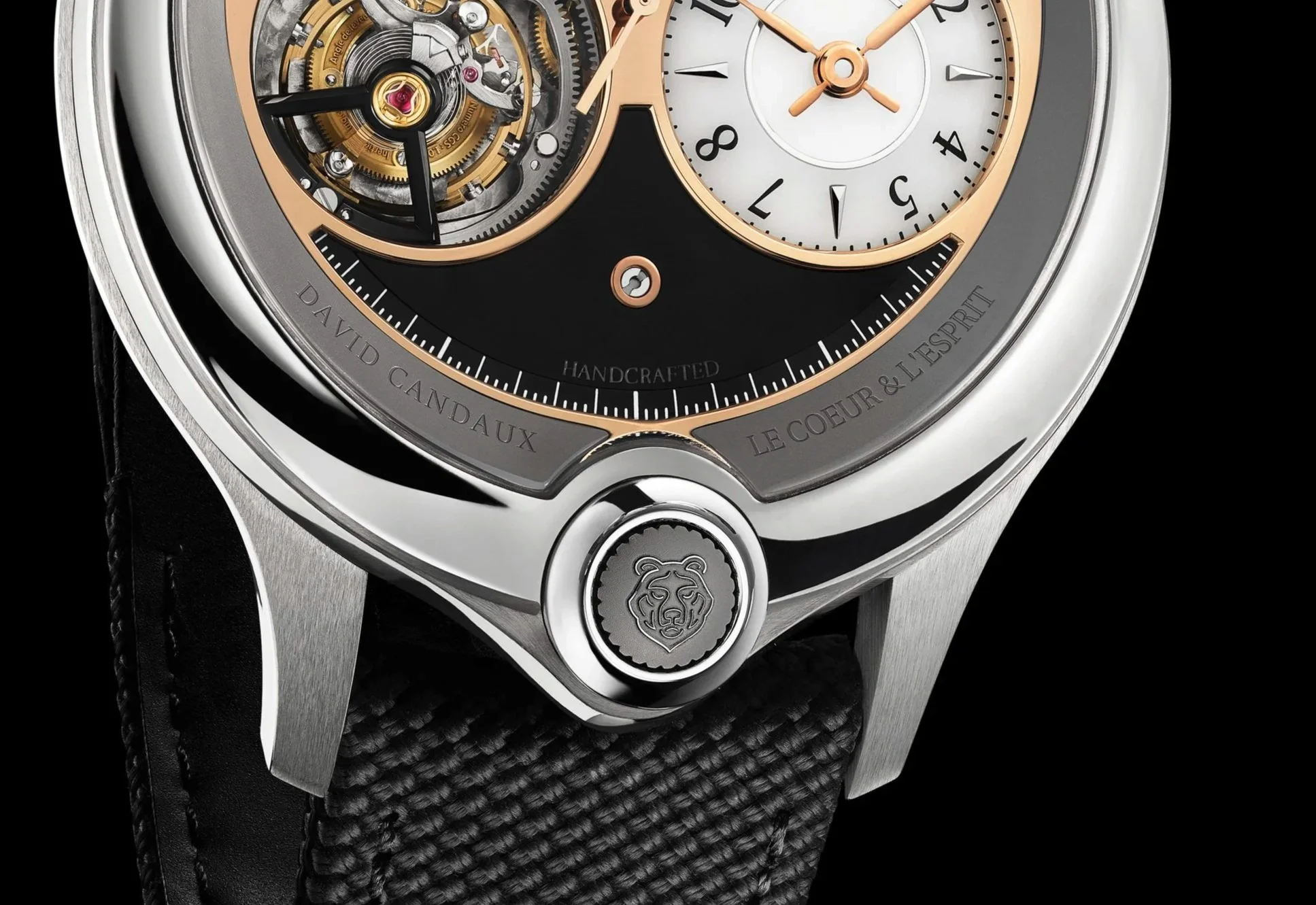
One of the defining characteristics of every David Candaux creation is the patented “Magic Crown” system positioned at 6 o’clock. Inspired by retractable pen mechanisms, the crown operates through a bistable cam system, allowing it to extend or retract through pressure activation. The mechanism consists of 31 individual components and has reportedly undergone more than 28,000 testing cycles.
The system offers three operating positions:
Neutral
Time-setting
Winding
When not in use, the crown retracts seamlessly into the case structure.
Availability
The DC1 Platinum Art of the Tourbillon by David Candaux will be available through the official website.
For further information, visit: https://go.davidcandaux.com/
