

ArtyA Genève Complexity Métiers d’Art: A World Premiere in Hand-Finished Haute Horlogerie
Two inclined Cônillon tourbillons at 12 and 6 o’clock meet a differential and a fully hand-decorated movement inside a sculpted sapphire case.
PRESS RELEASE | 800 WORDS | 6 MINUTE READ
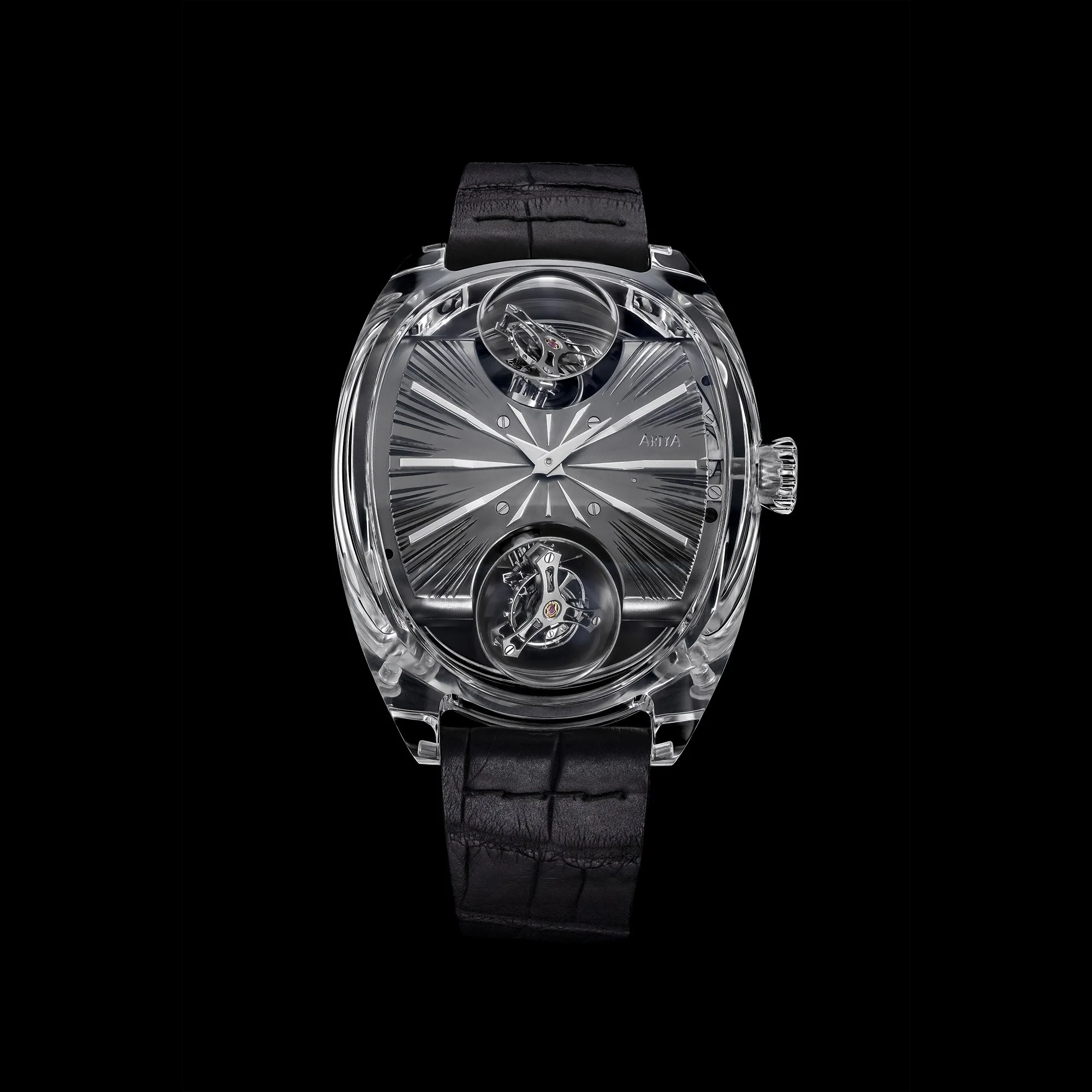
Photo Courtesy: ArtyA
A New Expression of the Complexity
ArtyA Genève introduces the Complexity Métiers d’Art, a limited edition of just nine pieces that brings a new artistic dimension to the brand’s highly complicated Complexity architecture. First unveiled as a world premiere at Watches & Wonders 2026, the Complexity established an unprecedented mechanical configuration combining two inclined tourbillons, known as Cônillons, positioned at 12 and 6 o’clock and linked by a differential. For the Métiers d’Art edition, the same exceptional mechanical architecture is retained while the surfaces of the movement and dial are transformed through extensive hand decoration. Engraving, hammering, shot blasting, perlage, bevelling and polishing are applied component by component, turning the movement into an expression of traditional Geneva craftsmanship.
Double Inclined Tourbillon at 12 and 6 O’Clock
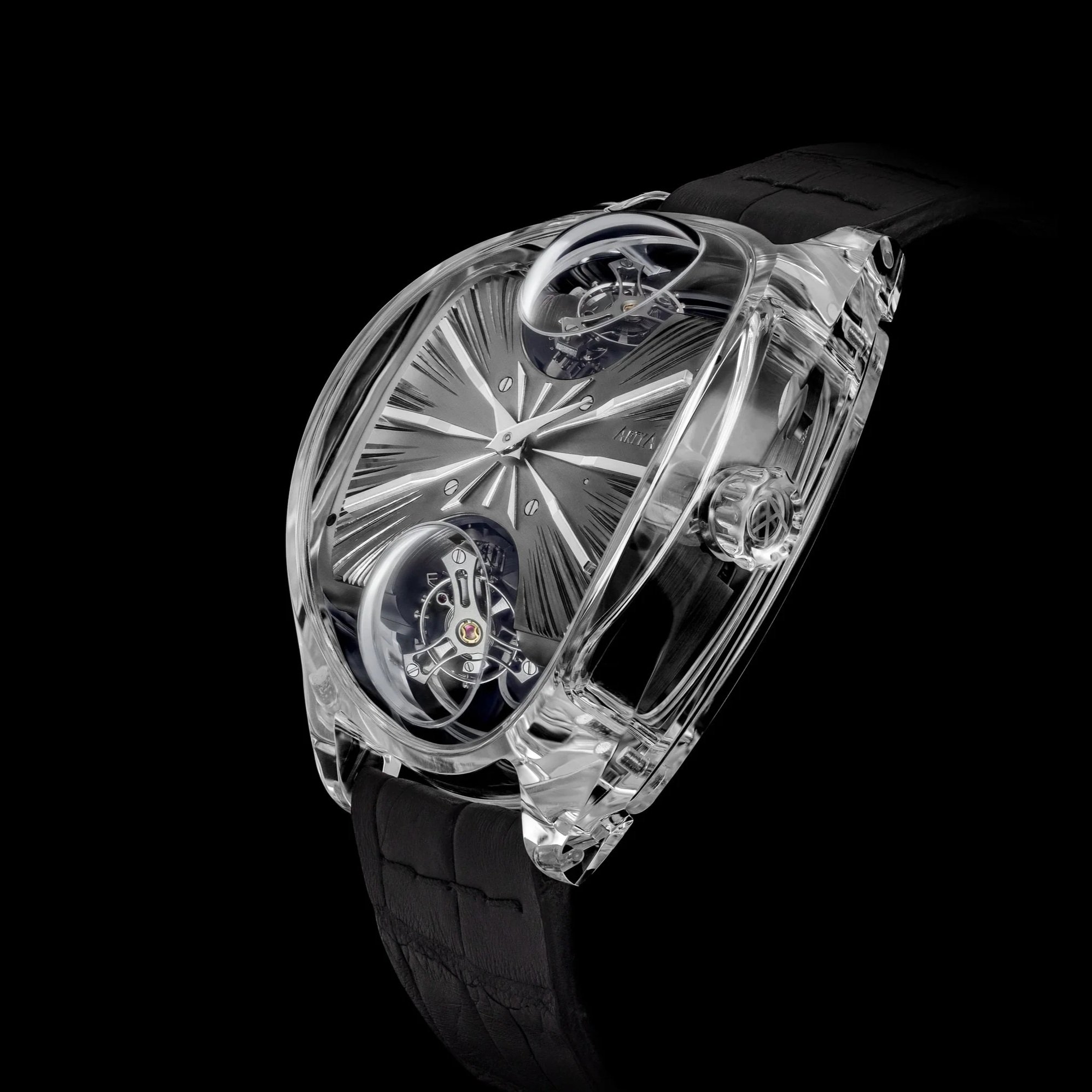
At the centre of the Complexity Métiers d’Art is the Complexity-01 calibre, built around two inclined Cônillon tourbillons. Unlike a conventional tourbillon, where the balance rotates around a single cylindrical axis, the inclined Cônillon follows a conical trajectory. This geometry is designed to address the effects of gravity across multiple vertical positions.
ArtyA Genève places two such regulators opposite one another at 12 and 6 o’clock. The configuration creates an unusual mechanical spectacle in which the axes of the balance, cage and lever are not parallel. Each tourbillon cage completes a rotation in 30 seconds, with the two cages rotating in offset directions.
The Differential: Connecting Two Regulators
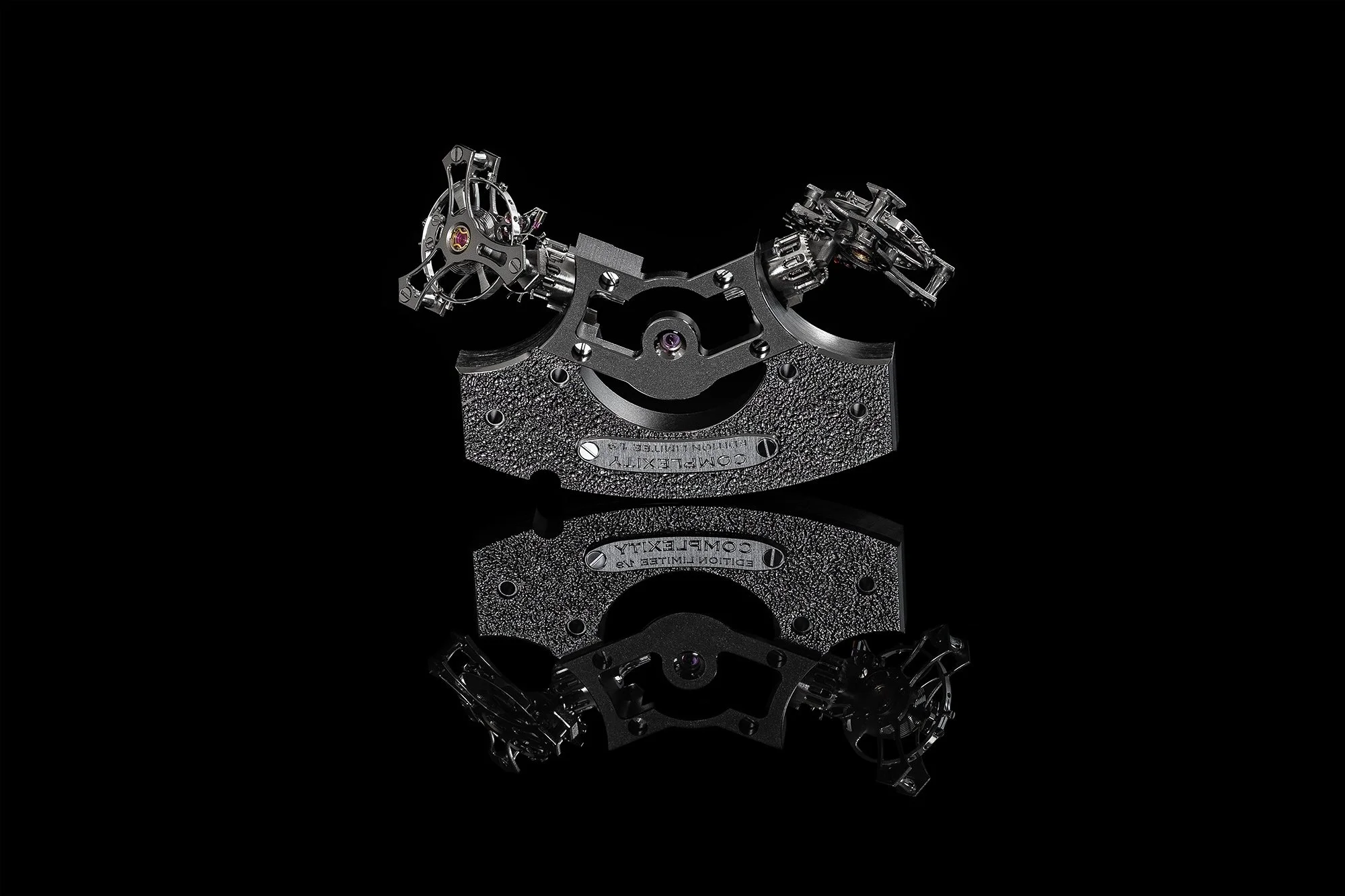
The two Cônillons are connected through a differential, which distributes energy between the two regulators while averaging their rates. This arrangement gives the Complexity its distinctive mechanical character: two independent regulating systems operate together as part of a single architecture. The differential also becomes one of the visual focal points of the movement, positioned beneath the central bridge and highlighted through dedicated finishing.
The Métiers d’Art Transformation
The defining characteristic of this edition is not a new mechanical complication, but the transformation of the movement through traditional hand craftsmanship. Where the original Complexity emphasised the purity of fine sandblasted surfaces, the Complexity Métiers d’Art introduces stronger relief, texture and contrast. Every bridge and visible surface becomes an opportunity for decoration. Upper surfaces receive hand shot blasting, while selected lower surfaces are hand hammered to create pronounced relief. Bevelled edges are polished by hand, while the flanks receive finishing with the cabron buff. The result is a darker, more textured interpretation of the Complexity architecture.
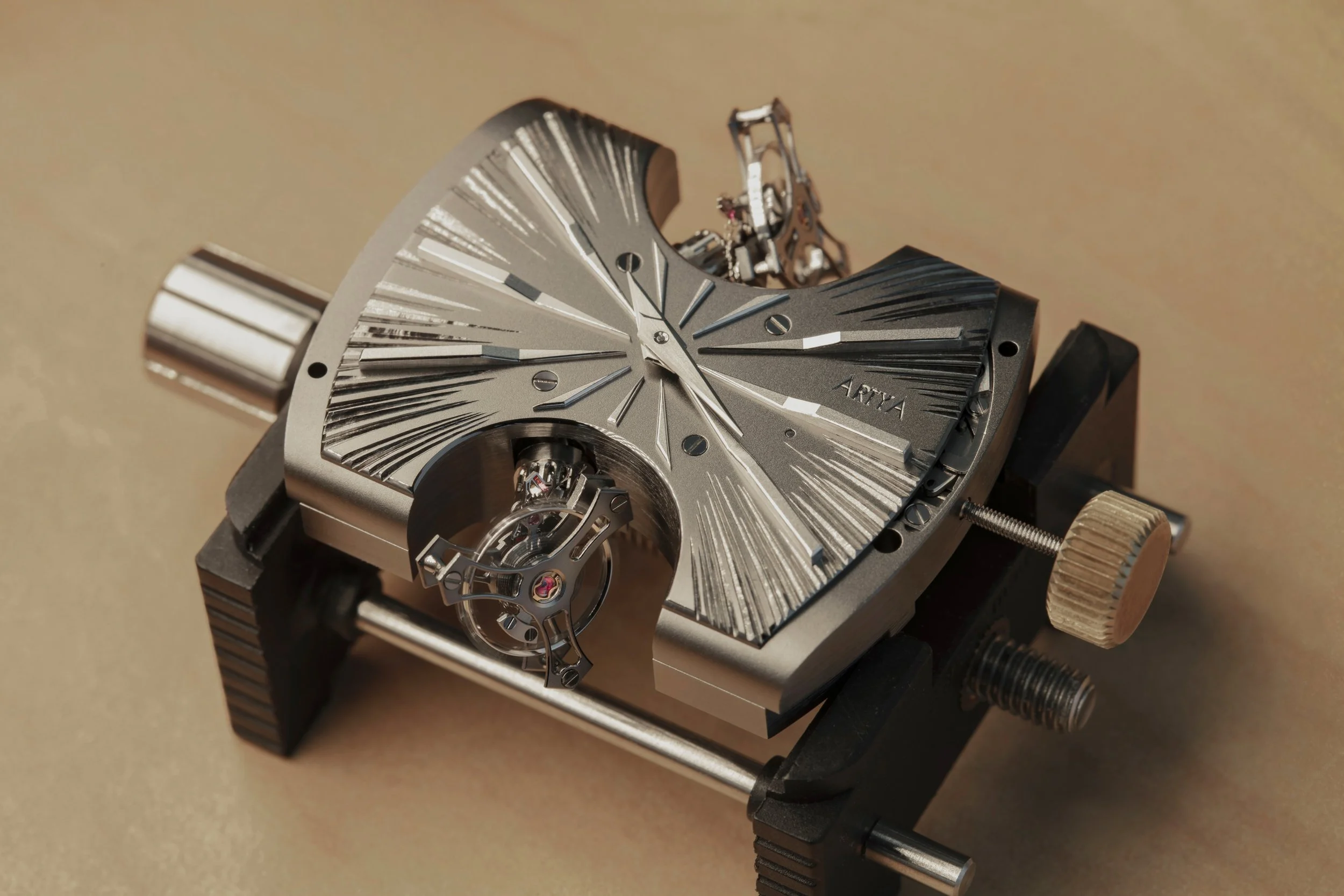
A Hand-Engraved Dial
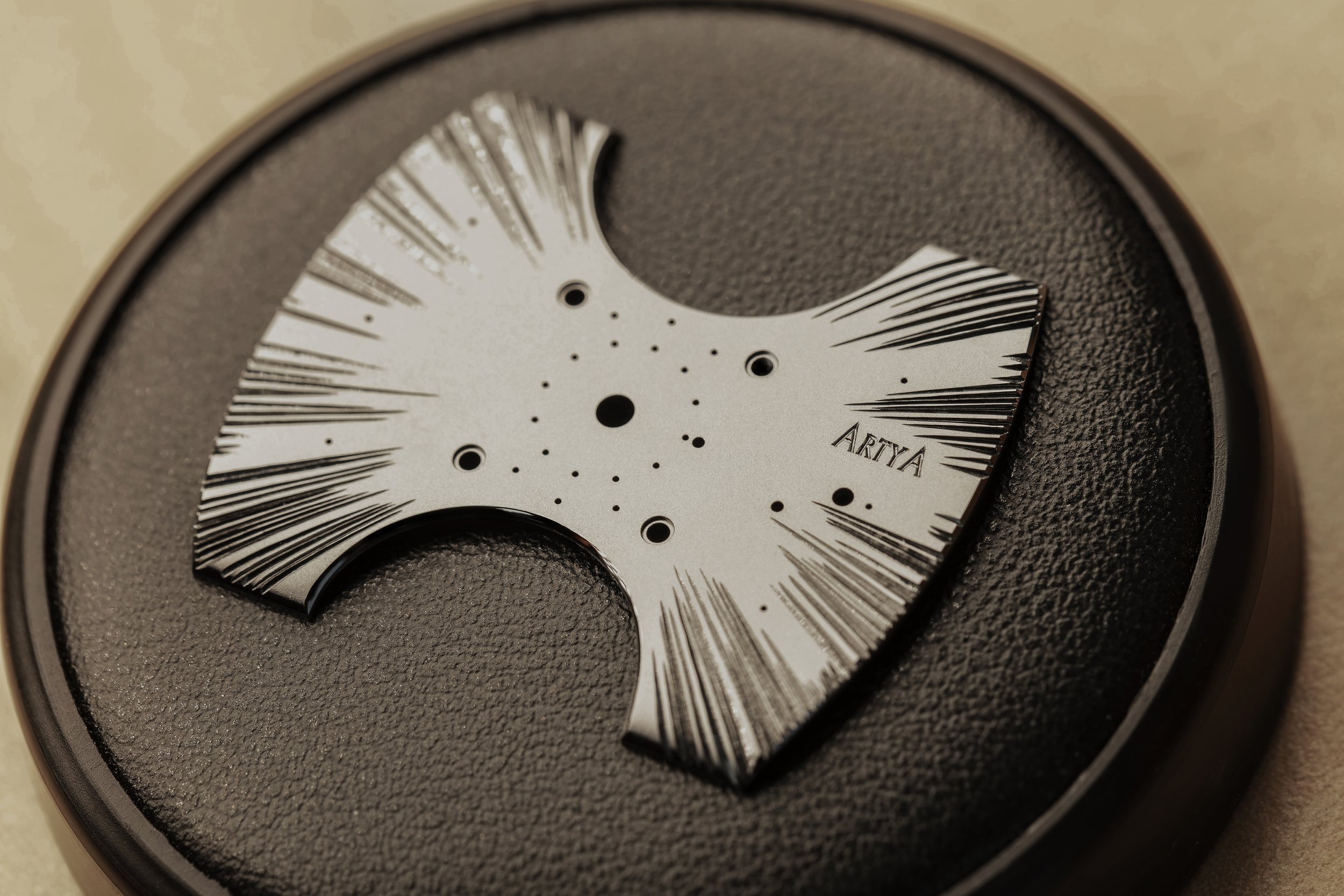
The dial is created on a finely sandblasted base and then entirely hand-engraved. From the centre, individual scratches are carved into the surface using a burin. Their varying depths create a textured landscape that reacts differently to changing light. The engraving is deliberately irregular in character, ensuring that the surface retains the visual evidence of the artisan's hand. Applied indexes continue the same dialogue between mechanical precision and manual craftsmanship. Their bevels are polished by hand, while the flanks are drawn using the cabron buff. The upper surfaces remain finely sandblasted so that the indexes integrate with the dial rather than competing with its engraved texture.
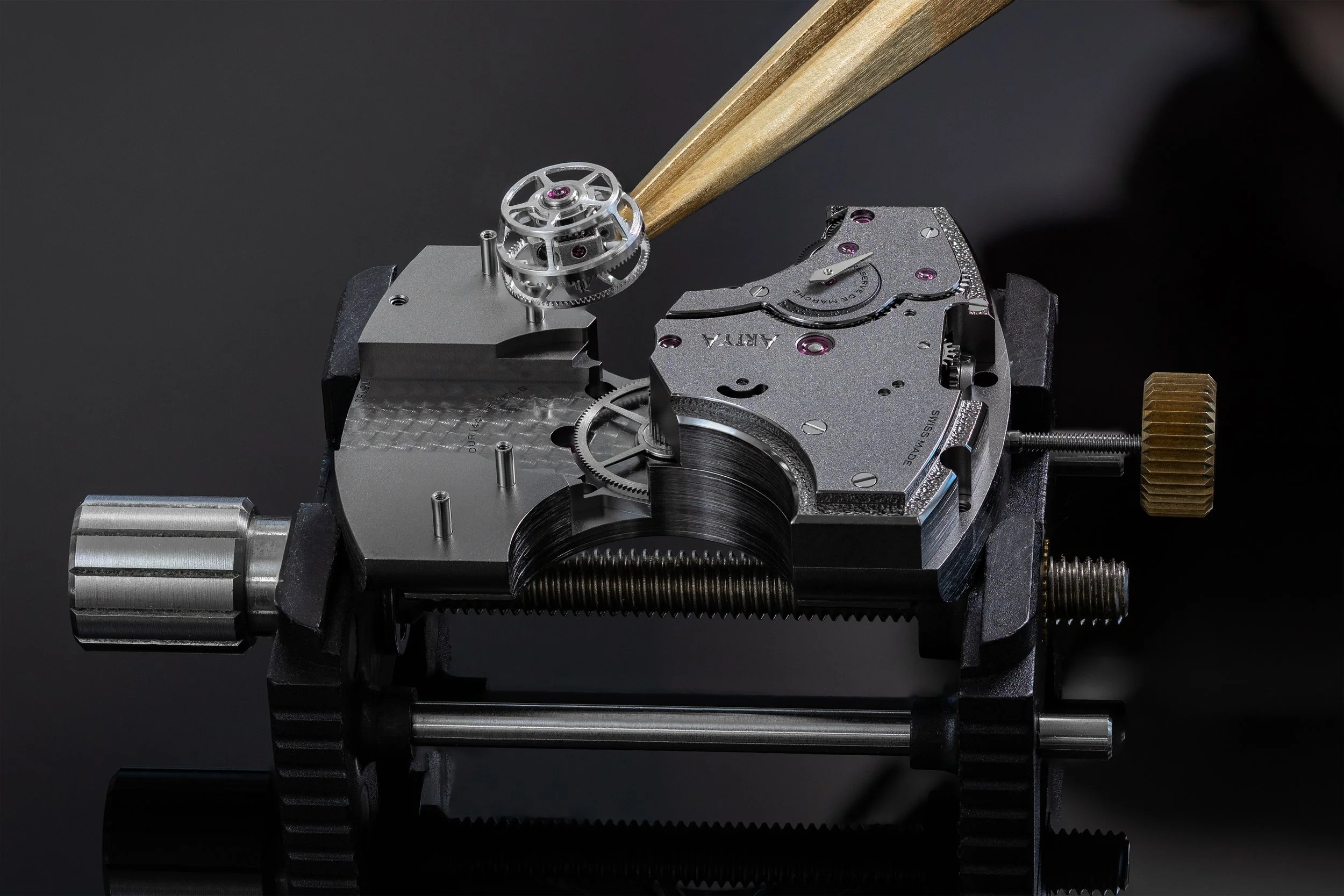
Component-by-Component Decoration
The Complexity Métiers d’Art treats the movement almost as a workshop catalogue, with individual components receiving distinct decorative treatments.
Mainplate - The differential zone receives hand perlage, while the flanks are finished using the cabron buff. The jewel count is laser engraved as a technical inscription.
Minute Train Bridge - The dial-side minute train bridge features fine sandblasting, hand engraving, hand-engraved scratches and hand bevelling.
Barrel Bridge - The barrel bridge combines hand hammering on its lower surfaces with hand shot blasting on the upper surfaces. Hand bevelling, engraved details and carbon-buff finishing complete the treatment.
Power Reserve Bridge - The power reserve bridge receives hand shot blasting and hand bevelling, with the reserve scale and technical inscriptions applied by laser.
Differential Bridge - The differential bridge features hand hammering on its lower surfaces, hand shot blasting on its upper surfaces and hand-polished bevels.
Numbered Complexity Plate - A dedicated numbered plate is exclusive to the Métiers d’Art edition. It receives hand engraving, bevelling and drawn strokes.
Indexes - The indexes are hand bevelled, with their flanks drawn using the cabron buff and their upper surfaces finely sandblasted.
Black Rhodium: A Darker Mechanical Landscape
The movement is black rhodium plated, providing a dark foundation for the hand-finished surfaces. Against this darker treatment, polished bevels and reflective edges become points of light across the movement. The contrast allows the various decorative techniques to remain visually distinct while reinforcing the sculptural character of the Complexity.
Availability
The ArtyA Genève Complexity Métiers d’Art is available through the ArtyA Genève official website.
For further information, visit: www.artya.com
